
Four Scenic Views of Jingling

眠雲臥石
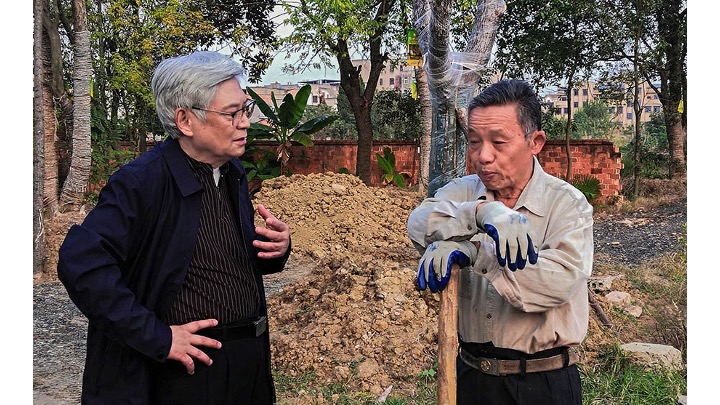
Tong Zhengxiang 童正祥 and Cheng Yuanbin 程遠斌
An essay dedicated to the life and work of Doctor Tong Zhengxiang 童正祥 (1945–2025),
a native son of Old Jingling and eminent scholar on the tea master Lu Yu 陸羽 (circa 733–804),
here engaged with the cultural preservationist and poet Cheng Yuanbin 程遠斌 (1949– )
at the site of the Confucian academy on Mount Huomen.
Four Scenic Views of Jingling
In times past, Jingling 竟陵 was an idyllic place of uncommon beauty and grace. Known as the End of Hills, Jingling spread below the southern foothills of Mount Dahong 大洪山 and across the alluvial plain of Hubei. The town lay just north of the swift waters of the river Han 漢江 that flowed eastward towards Wuhan 武漢 and on through the lower reaches of the Yangzi 揚子江. Jingling was distinguished by Donghu 東湖 and Xihu 西湖, placid twin lakes, east and west, on either side of a town that was further marked with freshwater springs, ponds, and canals. Not far from Jingling, East Ridge 東岡 rose above hamlets and villages scattered among low waterways, marshes, and lakes.
Lu Yu 陸羽
Native Son of Jingling
The Tang tea master Lu Yu 陸羽 (circa 733-804) was among Jingling’s most notable literary figures. A foundling at the age of two, Lu Yu was adopted and raised among the brethren of the Temple of the Hidden Dragon 龍蓋寺, a Buddhist monastery built on an islet near the shallows of Xihu 西湖. Trained as a novitiate, Lu Yu initially learned to read and write from scripture, but later as an adolescent of fourteen, he attended a Confucian academy on nearby Mount Huomen 火門山, returning to Jingling five years later to work on staff of two successive prefectural governors.
In 755, Lu Yu left Jingling to conduct research on tea in the wilds of Bashan Xiachuan 巴山峽川 in the western Shannan 山南道 and Jiannan 劍南道 circuits along the middle stretches of the Yangzi. He returned to Jingling a year later to settle in the nearby Village of East Ridge 東崗村, where he collated his field notes and adopted the alias Master East Ridge 東崗子. Within months of his return, Lu Yu was forced by the AnShi Rebellion to flee Jingling, crossing the Yangzi south to safety, eventually settling in Huzhou 湖洲, where he resided for the rest of his long life.
After Lu Yu published the Book of Tea 茶經 in 780, his literary prominence attracted the attention of the dragon throne, which appointed him to imperial offices and promised a living out of poverty. In response, Lu Yu summarily declined the posts and wrote the poem Lament of Desires, fondly recalling his hometown, where he spent his youth:
I do not desire wine vessels of yellow gold 不羨黃金罍
Nor desire cups of white jade. 不羨白玉杯
I do not desire mornings at court 不羨朝入省
Nor desire evening audiences. 不羨暮入臺
Only one thousand, ten thousand desires 千羨萬羨
For the western waters of the river 西江水
That flow past the walls of Jingling. 曾向竟陵城下來
 Western Gate of Jingling and the Isle of the Hidden Dragon Temple
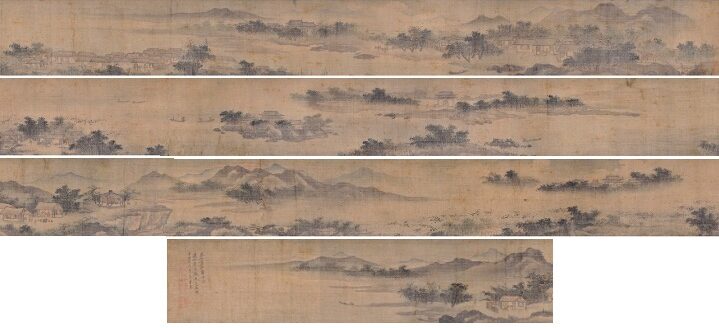
Seven and a half centuries after Lu Yu left Jingling, the Ming artist Guo Xu 郭詡 (1456–1532) painted Four Scenic Views of Jingling. Dated 1514, the long handscroll depicted a sweeping panorama along the banks of the Han River, extending east to west. The painting was an intimate portrait of Jingling, highlighting its most important and culturally significant places of the middle Ming period. Inscriptions by the artist divided the scroll, identifying four scenes in succession as Stone Lake at East Ridge, Donggang shihu 東岡石湖; City at the End of Hills, Jingling cheng 竟陵城; Villa on East Lake, Donghu bieye 東湖別業; and the Mengye Academy, Mengye shuyuan 夢野書院.
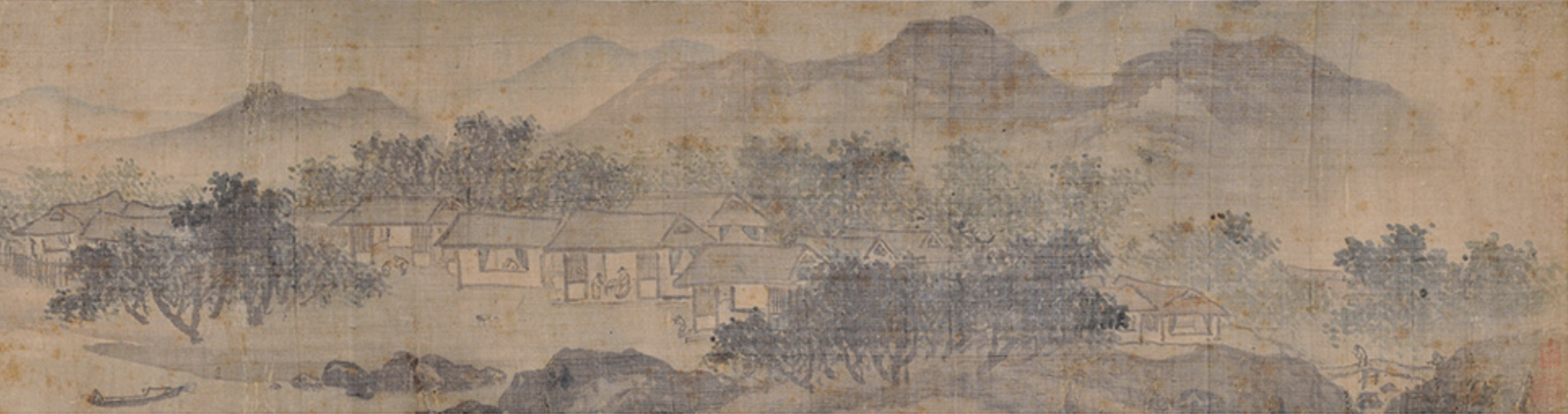
Stone Lake at East Ridge, East of Jingling
Historically, Jingling fostered literary and academic talents such as Lu Yu and the celebrated Tang poet Pi Rixiu 皮日休 (circa 834–883). During the Ming period, the nearby neighborhoods of East Ridge produced the brilliant scholars Ren Hengtai 任亨泰 (js 1388) and Lu Duo 魯鐸 (js 1502, 1461–1527), who achieved high academic and ministerial posts, spawning the quip, “Two Ministers, One Village Lane.” The accomplished Ren Hengtai and Lu Duo were sources of local pride and personages reflective of the high cultural and literary traditions of Jingling and East Ridge.
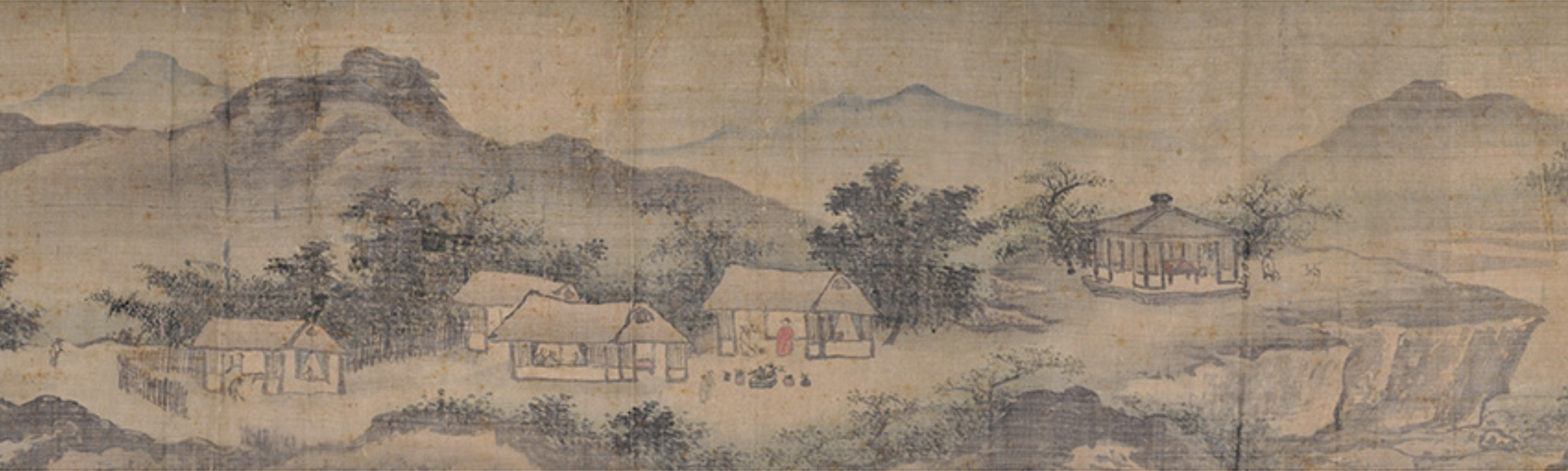
Mengye Academy, West Lake, Jingling
Lu Duo 魯鐸 was born amongst the hamlets and wetlands at Stone Lake just north of East Ridge Village, where the Lu clan had lived for generations. When young, Lu Duo was bookish such that when he sat for the high examinations, he placed first and second, winning imperial distinctions and coveted palace offices. But although he later headed ambassadorial delegations, directed ministries, and held chancellorships in the Ming capitals of Nanjing and Beijing, Lu Duo was known as a recluse. Indeed, he took the name Hermit of Donggang 東岡居士 to emphasize his devotion to eremitism. In a poem among his collected writings, Literary Anthology of Master Lu Wenke 魯文恪公文集, Lu Duo wrote fondly of his early days, drifting alone on Stone Lake:
While Chatting Aboard a Boat, A Brief Poem 舟聊短吟
West wind rippling lake waters, traces of autumn. 西風湖水漾秋痕
A short coat, a tattered book, door shut for the day. 短褐殘編日閉門
Suddenly seeing the bright moon rise above the river town, 忽見江城上明月
Rustic boat and village wine hail the dusk. 野船村酒弄黄昏
Lu Duo’s scholastic success over-rode his reclusive nature, propelling him to high ministerial office. Sometime during the first decade of his palace tenure, Lu Duo established the Mengye shuyuan 夢野書院 or the Academy of the Wilderness of Dreams, a school in Jingling named after the vast wetlands of Yunmengze 雲夢澤, the Marsh of Cloudy Dreams that once spread over the Jianghan Plain. After twenty-two years in office, Lu Duo retired, returning home to Jingling to personally oversee the Academy. As a poet, Lu Duo was a prominent member of the Chaling shipai 茶陵詩派, Tea Hill School of Poetry. Championed by the Grand Secretary Li Dongyang 李東陽 (1447-1516), whose ancestors hailed from Chaling 茶陵, Hunan, the Tea Hill School and its members strove for poetic language that was fresh, natural, elegant, and fluid. When Lu Duo inaugurated the Academy of the Wilderness of Dreams, Li Dongyang, who was also a famous calligrapher, inscribed the placard over the main hall of the school. On his death at the age of sixty-six, Lu Duo was honored by the throne with the posthumous elevation to Vice Minister of Rites and awarded the title Wenke 文恪, Elegant, Scrupulous, and Respectful.
Artist: Guo Xu 郭詡 (1456–1532)
China: Ming dynasty (1368–1644)
Title: Prospects of Spring, Chunwang juan 春望卷, 1514
Handscroll: ink and color on silk
Measurements: 31 centimeters x 975 centimeters
Collection of the Wuhan Museum, Hubei
A National Treasure of the First Order, Guojia yiji wenwu 國家一級文物
Inscriptions:
I. Stone Lake at East Ridge, Donggang shihu 東岡石湖
II. City at the End of Hills, Jingling cheng 竟陵城
III. Villa on East Lake, Donghu bieye東湖別業
IV. Academy of the Wilderness of Dreams, Mengye shuyuan 夢野書院
V. Guo Xu, Qingkuang of Taihe, painted Propects of Spring for Chancellor Master Lu Duo of Lianbei in the jiaxu year of the Zhengde reign, Taihe Qingkuang Guo Xu wei Lianbei Lu Duo Sicheng xiangsheng xie shi Zhengde jiaxu hua Chunwang juan 泰和清狂郭詡為蓮北魯鐸司成先生寫時正德甲戌畫春望卷
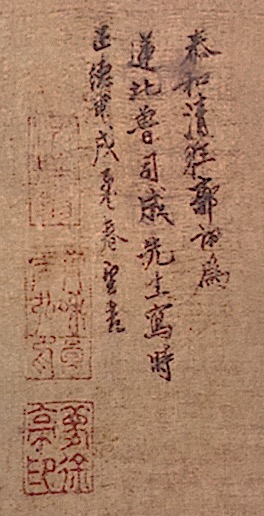
Artist’s Inscription and Seals
Artist’s Seals:
I/1
Relief/square:illegible
I/2-3
illegible
II/1
Relief/rectangle: Kuangweng 狂翁 (Elder Wild Man)
II/2
Relief/rectangle: Dahe Guo Renhong yin 大和郭仁弘印 (seal of Guo Renhong of Dahe)
II/3
Relief/rectangle: Mengxu ting yin 夢徐亭印 (seal of the Mengxu Pavilion)
Notes
Jingling 竟陵 is the old name of the present city of Tianmen 天門, Hubei. The site of the Confucian academy at Mount Tianmen 天門山, formerly known as Mount Huomen 火門山, is about thirteen miles northwest of Tianmen City. East Ridge or Donggang 東崗 is about twenty-one miles southeast of Tianmen City.
Guo Xu, Lu Duo, and Li Dongyang were artistically related. Li Dongyang was a patron of Guo Xu, and Li was the leader of the Tea Hill School of poetry of which Lu Duo was a member. Lu Duo may well have commissioned Guo Xu to paint the handscroll of Jingling.
The Four Scenic Views of Jingling was also known as the Landscapes of Jingling (Jingling shanshui tu 竟陵山水圖) and the Four Scenes of Jingling (Jingling sijing tu 竟陵四景圖). According to the artist’s inscription, the painting was entitled as the “handscroll Prospects of Spring (Chunwang juan 春望卷).”
Dr. Tong Zhengxiang was instrumental in identifying the Four Scenic Views of Jingling handscroll painting as an important cultural property. Tong, who was an avid philatelist, promoted the artwork by initiating the movement for the People’s Republic of China postal service to issue the painting’s image as a set of postage stamps. Tong also supported the reproduction of the painting in other media and formats, including a full set of postcards.
Tong Zhengxiang interpreted the inscribed date Zhengde jiaxu hua chunwang 正德甲戌畫春望 as “the fifteenth day of the first lunar month of the ninth year of the Zhengde era.”
The Orchid Pavilion Preface
眠雲臥石
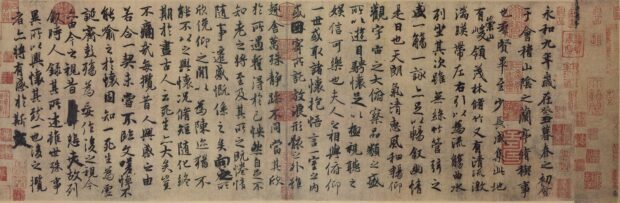
In the ninth year of the Yonghe reign, the guichou cycle, at the onset of the end of spring, we gather in Shanyin on Mount Kuaiji at the Orchid Pavilion for the purification ritual. Here the able and virtuous assemble, young and old, all gather. This place has lofty mountains and towering peaks, luxuriant woods and tall bamboo. Clear streams and surging rapids, set about on the left and right, entice all to sit and float cups in the flowing water. Although lacking the flourish of wind and silk strung instruments, a wine cup and a song are enough to express our deepest feelings. On this day, the sky is clear, and the air is fresh with a gentle, pleasant breeze. Looking up at the vastness of the universe, and down at the abundance of all things, we thus give eyes and mind free rein, exhausting the pleasures of sight and sound. Truly a delight! When bonded as friends, a lifetime seems to pass in an instant. Some care to converse closeted together, others deliver themselves to obsessions and indulge in unrestrained expression. Preferences infinitely differ, just as the serene contrasts with the cantankerous. Encountering pleasure and momentary gratification — a nonetheless dispirited self-satisfaction — we do not realize that dotage advances. When weary, and feelings change with circumstances, there is naught but sighs and regret. Former pleasures soon become things of the past. Even so, we cannot help but be moved by them. Whether long or short, life must change, for there is always an end. As the ancients said, “Death and birth are momentous!” How utterly bitter! With each reading of the causes of melancholy among those in the past, there is ever a resonance. In response, I find myself lamenting and unable to articulate my feelings. But I know for certain that equating life and death is a fallacy. and comparing a long life with a short one is a delusion. Those who come after will view us as we look upon those who came before. How tragic! And so, I record everyone present on this occasion and transcribed their verses. Although time and circumstance differ, the sentiments evoked are constant. May future readers be moved by this foreword.
Composed by Wang Xizhi, General on the Right of the Jin dynasty
永和九年嵗在癸丑暮春之初會于會稽山隂之蘭亭脩稧事也羣賢畢至少長咸集此地有崇山峻領茂林脩竹又有清流激湍暎帶左右引以為流觴曲水列坐其次雖無絲竹管弦之盛一觴一詠亦足以暢敘幽情是日也天朗氣清恵風和暢仰觀宇宙之大俯察品類之盛所以遊目騁懐足以極視聽之娛信可樂也夫人之相與俯仰一世或取諸懐抱悟言一室之内或因寄所託放浪形骸之外雖趣舎萬殊静躁不同當其欣扵所遇暫得扵己怏然自足不知老之将至及其所之既惓情随事遷感慨係之矣向之所欣俛仰之閒以為陳迹猶不能不以之興懐况脩短随化終期扵盡古人云死生亦大矣豈不痛哉每攬昔人興感之由若合一契未嘗不臨文嗟悼不能喻之扵懐固知一死生為虛誕齊彭殤為妄作後之視今亦由今之視昔悲夫故列敘時人錄其所述雖世殊事異所以興懐其致一也後之攬者亦将有感扵斯文
晉右將軍王羲之
Figure
Wang Xizhi 王羲之 (303–361)
Lanting ji xu 蘭亭集序 (Orchid Pavilion Preface, 353)
Shenlong ben 神龍本 (The Shenlong version, 639) by Feng Chengsu 馮承素 (617–672), attributed
Palace Museum, Beijing
Note
Jinshu 晉書 (Book of Jin, 648), juan 80, lieh juan 50, p. 4a. Compiled by Fang Xuanling 房玄齡 (579–648) and Chu Suiliang 褚遂良 (596–658). SKQS.
Comparative translations:
Lin Yutang, The Importance of Living (New York: Reynal and Hitchcock, 1937), pp. 156–158.
Hsin Chang Chang, Chinese Literature: Volume Two: Nature Poetry, (Edinburgh: Edinburgh University Press, 1977), pp. 8–9
Marshall P.S. Wu, The Orchid Pavilion Gathering: Chinese Painting from the University of Michigan Museum of Art, (Ann Arbor: Regents of the University of Michigan, 2000), vol. 1, cat. no. 17, pp. 104–109 and vol. 2, cat. no. 17, ns. 1–22, pp. 43–46.
K.S. Vincent Poon and Kwok Kin Poon. English Translation of Classical Chinese Calligraphy Masterpieces. Toronto, 2019, pp. 46–50.
Listening for Silence
眠雲臥石
Among the literati and aristocracy of dynastic China, the art of tea was a culinary and cultural pursuit of primary import, a social and creative activity that developed from the ancient practices of chefs de cuisine, physicians, apothecaries, and alchemists, all of whom relied on the agrarian and production skills of cultivators for tea. Over two millennia, the art of tea evolved within a constantly changing panorama of aesthetics, methods, and paraphernalia. Transformation and innovation in the art of tea affected criteria, procedure, and equipage, and in turn such variations frequently altered technique timing, and performance. Yet, even as the art of tea changed, there were immutable principles and rudiments. The true color, scent, and flavor of tea were the three unassailable constants, just as water was the foundational medium of the drink:
“Tea is the spirit of water.
Water is the essence of tea.
Without pure water, its spirit cannot be revealed.
Without fine tea, its essence cannot be perceived.”
Zhang Yuan, Chalu (Record of Tea, ca. 1593)
Water was vital to the expression of tea and provided the means by which essence of the leaf was made manifest. Accordingly, heating water was one of the most important steps in the brewing of tea.
In the eighth century, the Tang tea master Lu Yu described boiling water in an open cauldron in a maximum of three stages:
“Of boiling water, when bubbles appear like fish eyes and there is a faint sound, that is the first boil. When bubbles climb the sides of the cauldron like strung pearls in a gushing spring, that is the second boil. When appearing like mounting and swelling waves, that is the third and last boil. Boiled any more, and the water is old and spent and undrinkable indeed.”
Lu Yu, Chajing (Book of Tea, 780)

Brewing Tea in a Cauldron
By observing the three stages of boiling water, Lu Yu believed that the quintessence of the water was preserved and present. However, after a generation or so, the method of heating water in an open cauldron was superseded by boiling water in a ewer, a closed vessel with a narrow neck that did not allow the observation of water and required a different means by which to judge the heat of the water.

Ewers for boiling water
Taking direction from Lu Yu, who described the ever present “faint sound” of boiling water, later tea masters listened for the reverberations made by the heating vessel.

Crane Woods, Jade Dew
Five hundred years after Lu Yu, the Song official Luo Dajing published the Helin yulu 鶴林玉露 (Crane Woods, Jade Dew, 1252), a sixteen-volume collection of disparate writings on scholarly subjects that included reviews and critiques of earlier Song dynasty philosophers and writers as well as commentaries on numerous miscellaneous subjects, including the art of tea.
Among Luo’s sundry writings was an observation on the boiling of water for tea in which he noted the several differences between the practices of the Tang and the procedures of the Southern Song dynasty. Luo Dajing attributed the variations to the changes in equipage and utensils, especially the bronze tripod brazier and silver cauldron:
Crane Woods, Jade Dew “My classmate Li Nanjin said that the Book of Tea used “fish eyes” and “strung pearls in a gushing spring” to gauge the boiling of water. Nowadays, however, a tripod and cauldron are rarely used to make tea.”
余同年李南金云茶經以魚目湧泉連珠為煑水之節然近世瀹茶
鮮以鼎鑊
Luo Dajing then explained that the open cauldron formerly used to boil water had in later times been replaced by a closed ewer. Luo also noted that the primary means of determining the three stages of boiling changed from observing bubbles to listening to the distinctive sounds created by the heating vessel. However, unlike Lu Yu, who gauged the water at the beginning of the second boil, Luo Dajing gauged the water after the second boil and just before the third boil, admonishing the practitioner to use that precise instant as the proper measure of heat.

Boiling Water with a Ewer
Crane Woods, Jade Dew “Using a ewer to boil water makes it difficult to observe, so the distinctive sounds of the first, second, and third boils are used as the requisite criteria. To reiterate, Lu Yu’s method used the imperfect tea cauldron, and so the second boil was used as the appropriate measure, none of which is comparable to today’s boiling hot water in a tea ewer. Use the sound between the second and third boils as the proper gauge.”
用瓶煑水難以侯視則當以聲辨一沸二沸三沸之節又陸氏之法以未就茶鑊故以第二沸為合量而下未若以今湯就茶甌瀹之則當用背二涉三之際為合量乃為聲辨之
Next Luo Dajing cites a poem of sounds that celebrates the stirring of insects in early spring, followed by a summer chorus of cicadas, and then the rumble of the convoy in a succession of seasons that end with the harvest and transport of tea. Next in the poem comes instruction to listen for the reverberations of the ewer, sounds that signal the proper boiling of water for the brewing of tea, sounds that resemble the soft, whispery susurration of wind in the pines or the murmuring waters of a brook.
Crane Woods, Jade Dew “Thus, the poem of distinctive sounds states,
Among the stone steps, insects chirp and ten thousand cicadas urge on.
Suddenly a thousand carts come trundling.
On hearing the sounds of wind in the pines and burbling brook,
Quickly call for the pale celadon porcelain cup!”
詩云砌蟲唧唧萬蟬催忽有千車梱載来聽得松風并澗
水急呼縹色緑瓷杯
Then, beyond complementing the finesse of the poetry, Luo Daojing further instructed that water be boiled only to the point when it was thoroughly heated but still maintained its lively quality, for then the brewed tea tasted sweet. If the water was overly boiled, then the tea tasted bitter. Moreover, even when the heated ewer emitted the sound of reverberations, if the water boiled too suddenly, too quickly, then the water was spent, and the brewed tea tasted bitter.
Crane Woods, Jade Dew “This commentary is indeed refined. However, the method of making tea requires boiled water that is fresh and not spent. When the boiled water is fresh, then the flavor of the tea is sweet; when spent, then it is excessively bitter. Even if there are the sounds of wind in the pines and burbling brook, but the boiling be done in haste, would there be nothing but water, spent and bitter?”
其論固已精矣然瀹茶之法湯欲嫩而不欲老蓋湯嫩則茶味甘老則過苦矣若聲如松風澗水而遽瀹之豈不過於老而苦哉
Finally, Luo Daojing ended his commentary with an addendum to the aforementioned poem,
providing a refinement in the boiling of water by waiting for the boil to cease and listening for the sound of silence before brewing with it. He then added rain falling on the scaly leaves of the cypress tree to the sounds that favored the proper brewing of a sweet tasting tea that he called Spring Snow.
Crane Woods, Jade Dew “By moving the ewer away from the fire, waiting awhile until the boiling stops, and then brewing with it, only then is the boiled water elevated and the flavor of tea, sweet. This is something that Nanjin did not mention. Therefore, I amend the poem:
When the sounds of wind in the pines and cypress rain arrive,
First, quickly remove the bronze ewer from the bamboo stove,
Wait until the sounds are all silent,
When the bowl of Spring Snow surpasses ambrosia.”
惟移瓶去火少待其沸止而瀹之然後湯適中而茶味甘此南金之所未講者也因補以一詩云松風檜雨到来初急引銅瓶離竹爐待得聲聞俱寂後一甌春雪勝醍醐
Complete Text on boiling water from Crane Woods, Jade Dew
鶴林玉露
余同年李南金云茶經以魚目湧泉連珠為煑水之
節然近世瀹茶鮮以鼎鑊用瓶煑水難以侯視則當
以聲辨一沸二沸三沸之節又陸氏之法以未就茶
鑊故以第二沸為合量而下未若以今湯就茶甌瀹
之則當用背二涉三之際為合量乃為聲辨之詩云
砌蟲唧唧萬蟬催忽有千車梱載来聽得松風并澗
水急呼縹色緑瓷杯其論固已精矣然瀹茶之法湯
欲嫩而不欲老蓋湯嫩則茶味甘老則過苦矣若聲
如松風澗水而遽瀹之豈不過於老而苦哉惟移瓶
去火少待其沸止而瀹之然後湯適中而茶味甘此
南金之所未講者也因補以一詩云松風檜雨到来
初急引銅瓶離竹爐待得聲聞俱寂後一甌春雪勝
醍醐
Note
Luo Dajing 羅大經 (js 1226, 1196–after 1252), Helin yulu 鶴林玉露 (Crane Woods, Jade Dew, 1252), juan 3, pp. 3a-3b. SKQS
Figures
1
Attributed to Yan Liben (died 673)
Xiao Yi Stealing the Orchid Pavilion Preface, detail
China: Tang dynasty (618–907)
Handscroll: ink and color on silk
27.4 x 64.7 centimeters
National Palace Museum, Taipei, Taiwan, Republic of China
2
Crane Woods, Jade Dew, Scroll Three
Facsimile
3
Anonymous
Preparing Tea, detail
Mural in the tomb of Zhang Shiqing
China: Liao Dynasty (1093-1117)
Wall painting: plaster with ink and color
42.3 x 30 centimeters
Xuanhua, Hebei, China
4
Anonymous
Preparing Tea, detail
Mural in the tomb of Zhang Shiqing
China: Liao Dynasty (1093-1117)
Wall painting: plaster with ink and color
42.3 x 30 centimeters
Xuanhua, Hebei, China
The Song of Tea
眠雲臥石
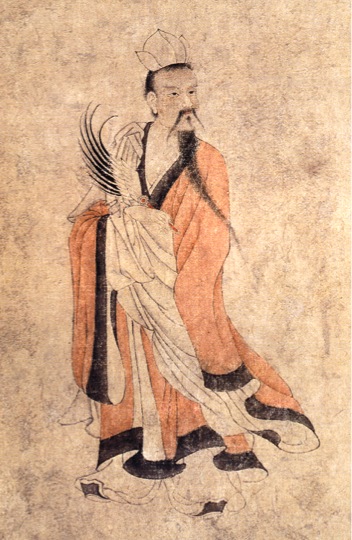
Lu Tong (790–835)
Writing in Haste to Thank Imperial Grand Master of Admonishment Meng for Sending New Tea
The sun is as high as a ten-foot measure and five, and I am deep asleep.
The general bangs at the gate loud enough to scare the Duke of Zhou!
He announces that the Grand Master sends a letter, the white silk cover is triple-stamped.
Breaking the vermilion seals, I imagine the Grand Master himself inspecting these three hundred moon-
shaped tea cakes.
He heard in the New Year that they entered the mountain, startling the hibernating insects that rise
on the spring winds.
The Emperor must be the first to taste Yangxian tea. Until then, the one hundred plants dare not
bloom.
Benevolent breezes intimately embrace pearly tea buds, the early Spring coaxing out sprouts of golden
yellow.
Picked fresh, fired till fragrant, then packed and sealed; tea’s essence and goodness is not wasted.
Such venerable tea is meant for princes and nobles. How could it reach the hut of this mountain
hermit?
Shutting the brushwood gate against vulgar visitors, donning my gauze cap, I simmer and taste tea in
solitude.
Jade green clouds draw a steady wind, gleaming white froth gathers on the side of the bowl.
The first bowl moistens my lips and throat.
The second bowl banishes my loneliness and melancholy.
The third bowl penetrates my impoverished core, wherein are only the five thousand canonic scrolls.
The fourth bowl raises a light perspiration, all life’s inequities dispel through my pores.
The fifth bowl purifies my flesh and bones.
The sixth bowl leads me to the Immortals.
The seventh bowl I cannot drink, feeling only a pure wind rising beneath my wings.
Where is Mount Penglai, the Isle of Immortals?
I, Master Jade Stream, ride the pure wind, wishing to return.
Gathered on the mountaintops, the Immortals oversee the earthly realm,
High and lofty, removed from wind and rain.
Do they know the bitter lives of the myriad peasants toiling below the cliffs?
Thus, I ask the Grand Master about these common folk.
Whether or not, in the end, they will ever rest.
盧仝
走筆謝孟諫議寄新茶
日高丈五睡正濃,軍將打門驚周公。口云諫議送書信,
白絹斜封三道印。開緘宛見諫議面,手閱月團三百片。
聞道新年入山裏,蟄蟲驚動春風起。天子須嘗陽羨茶,
百草不敢先開花。仁風暗結珠琲瓃,先春抽出黃金芽。
摘鮮焙芳旋封裹,至精至好且不奢。至尊之餘合王公,
何事便到山人家。柴門反關無俗客,紗帽籠頭自煎吃。
碧雲引風吹不斷,白花浮光凝碗面。
一碗喉吻潤,兩碗破孤悶。三碗搜枯腸,唯有文字五千卷。四碗發輕汗,
平生不平事,盡向毛孔散。五碗肌骨清,六碗通仙靈。
七碗吃不得也,唯覺兩腋習習清風生。蓬萊山,在何處。
玉川子,乘此清風欲歸去。山上群仙司下土,
地位清高隔風雨。安得知百萬億蒼生命,
墮在巔崖受辛苦。便為諫議問蒼生,到頭還得蘇息否。
Source
Yuding quan Tangshi 御定全唐詩 (Imperially Commissioned Complete Poetry of the Tang Dynasty), juan 388, pp. 4a–5a.
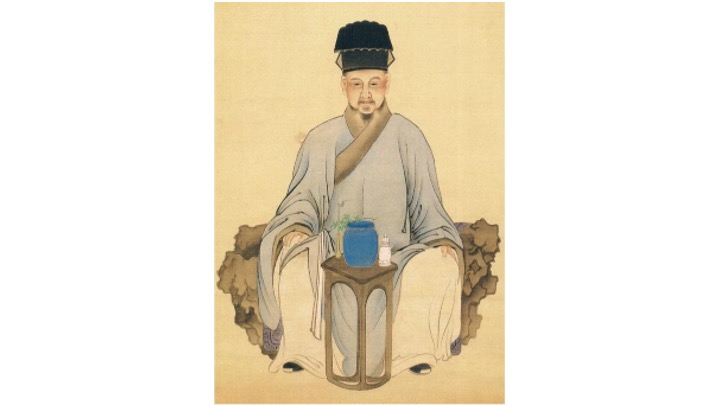
Figure
Artist unknown
Portrait of Tao Hongjing as a Daoist, detail
Yuan dynasty, 14th century
Album leaf: ink and color on paper
National Palace Museum, Taipei
The Autobiography of Imperial Instructor Lu
眠雲臥石
Lu Wenxue zizhuan 陸文學自傳, The Autobiography of Imperial Instructor Lu
by
Lu Yu (circa 733–804)
An Annotated Translation, Introduction, and Commentary by Steven D. Owyoung
Introduction to The Autobiography of Imperial Instructor Lu,
an excerpt from the forthcoming book on the life and art of the Tang tea master, Lu Yu (circa 733-804), author of the Chajing, the Book of Tea
Lu Yu 陸羽 (circa 733–804) was a scholar who lived during the eighth century in Tang dynasty China. He was renowned as the author of the Chajing 茶經, a treatise also known as the Book of Tea. The Chajing was a pioneering study of tea that described the cultivation of the plant, the manufacture of caked tea, and the preparation and service of the leaf as a beverage. Comprised of ten parts in three volumes, the Book formalized and codified the implements, utensils, and methods employed in the art of tea. By writing the Chajing, Lu Yu also compiled the first anthology of tea as well as the first hagiography of historical and mythical figures associated with the leaf. For centuries, the Book of Tea remained the exemplar of writings on tea, and Lu Yu, the foremost practitioner of the art of tea.
In addition to the Chajing, Lu Yu wrote an autobiography, a personal history in which he recounted his early life as a foundling and fledgling scholar. Known as the Lu Wenxue zizhuan 陸文學自傳 or The Autobiography of Imperial Instructor Lu, the account was written when Lu Yu was just twenty-eight years of age. It is a wonder how such a young man of so little experience or social standing might warrant a biographical report, much less possess the conceit to write it himself. Over the centuries, numerous profiles and chronologies have offered various accounts of his early activities and attainments, but it is Lu Yu’s very own account that served as the touchstone for understanding the formative years of his life.
Written in the third person, The Autobiography of Imperial Instructor Lu presented a detailed and often intimate portrait of Lu Yu, from childhood through young adulthood. The first lines of his account provided the raisons d’être for writing a personal record so early in life. Firstly, Lu Yu explained that his surname and given name — Lu 陸 and Yu 羽 — were in question, and so too was his courtesy name, Hongjian 鴻漸, and that some people often confused his names out of ignorance. Secondly, not only were his names and origins at issue but his personal integrity as well.
Moreover, Lu Yu was acutely aware that some who did not know him were daunted by his ugliness, his coarse appearance and disheveled dress, and further unsettled by his speech impediment and cantankerous disposition, not to mention his often distracted and distant air. All of these physical and personal traits conspired to present him at a disadvantage, if not as downright disagreeable, his character questionable. To doubters of his goodness, he hastened to rectify their mistaken impression. To his friends and acquaintances, Lu Yu reassured all that he was ever forthright, humble, and true.
Having explained his name and nature, Lu Yu next claimed an early inclination towards reclusion, to shutting his door to the outside world to live in seclusion. He described how he read books at his leisure in a lone hut along the banks of a broad stream and welcomed only the society of learned monks and scholars. He wrote that he habitually disappeared into the countryside, simply dressed in peasant clothes, to ply the abundant waters of the riverine south and roam about without direction. He confessed to attacks of depression and despair such that he returned from his wanderings each night exhausted and distraught. He knew that people who saw him whispered and thought him quite mad.
Midway through the autobiography, Lu Yu revealed that he was once a foundling forsaken near a Buddhist monastery in Jingling on the Hubei plain west of Wuhan. Discovered by the friary abbot, he was rescued and raised as a novice, trained from childhood to lead a cloistered existence devoted to scripture and monastic routine. But though just an adolescent boy, Lu Yu questioned the monkish and celibate life, an existence without the joys of family, writing, or books. Dissatisfied with studying only religious teachings, Lu Yu requested to be taught secular writings, specifically the Confucian canon, only to be refused by the abbot, who insisted that the boy learn solely from Buddhist scripture. Lu Yu, however, persisted, engaging whomever beyond the priory walls in conversation, hoping to learn more. To blunt Lu Yu’s heretical desire for worldly knowledge, the abbot feigned disaffection and punished him, forcing the boy with harsh, demeaning labor and physically abusing him for his stubborn disobedience. Denied and maltreated, Lu Yu ran away from the monastery and joined a troupe of itinerant performers for whom he happily indulged his gift for farce and satire, performing stock comedic roles and writing satirical skits and jokes. Desperate to find his fugitive ward, the abbot personally searched for Lu Yu, only to discover him acting on stage, reveling in the limelight before approving audiences as an uncommon player of the demimonde at the very lowest rungs of society. To cox the boy to return to the priory, the abbot relented, granting Lu Yu dispensation and promising to allow him limited study of secular writings.
Yet, even while back at the monastery, Lu Yu and his thespian talent were still in demand. Officials, who had seen him perform on stage, sought him out as a young but dazzling master of ceremonies for their requisite entertainment of visiting guests and officers. In the face of command performances, the abbot yielded, allowing the boy to appear at events sponsored by the local and prefectural governments. On one pivotal occasion, Lu Yu met a high official from the imperial capital, an influential governor who set him firmly on a lifelong path of learning and scholarship by sending him to school and later appointing him to the prefectural staff. Subsequent Jingling officials also became benefactors, mentors, and friends, sharing with him their interests in tea and poetry, and setting by example the intellectual rigor and proper conduct of the scholarly, accomplished gentleman.
At age twenty-one or so, Lu Yu traveled west to Sichuan to conduct research on the botanical nature and horticulture of tea. Returning to Jingling, he was then forced by rebel armies in the north to seek the relative safety of the south by following the exodus of refugees across the broad waters of the Yangzi. He traveled to Zhejiang and eventually settled in Huzhou, a tea-growing region along the southwestern shores of Lake Tai.
Arriving in Huzhou as an émigré with few friends, Lu was unknown and suspect to those he met. And, although he was well educated and connected elsewhere, Lu Yu was initially misunderstood by Huzhou society such that he felt compelled to shield himself and his reputation in a subjective but factual account. Thus, amid rumor and misconception, Lu Yu chose autobiography as the means by which he conducted his self-defense.
Lu Yu set his thoughts to paper using brush and ink and initially wrote notes in cursive script as words and phrases came to mind, for as a learned scholar his biography would be a literary endeavor full of allusion. As the themes and structure took shape, his composition went through several drafts before the final manuscript was inscribed in a clear hand, dated 761, and mounted as a small handscroll. Lu Yu then passed the scroll to friends so that they might read and copy it for themselves. Lent and borrowed, read and copied, the autobiography gradually circulated more widely, passed from hand to hand among the literati of Huzhou and spread by his admirers to the distant provinces.
Lu Yu concluded his autobiographical account with several titles of his writings. Two compositions, written in response to uprisings against the central government, emphasized his loyalty to the Tang throne and state; the verses further supported by a treatise on the duties between sovereign and vassal. Remaining titles disclosed his keen interest and knowledge in lexicography, biography, genealogy, and history as well as his expertise in the occult. Significantly, one work in three volumes emphatically declared that he had already written the Book of Tea.
It was clear from the structure of the Autobiography that Lu Yu considered the first and last portions of the text as the most important: his good name and his scholarship were the defining contours of his life. As Lu Yu became known and eventually famous, renowned scholars and high officials supported his person and activities until the end of his days.
__________________
Cover Illustration
Chajing 茶經, calligraphy by Fu Shen 傅申 (Shen C.Y. Fu, 1937–2024), noted Chinese art historian, calligrapher, painter, and connoisseur. Former Research Scholar of calligraphy and painting, National Palace Museum, Taipei; Associate Professor, Yale University; Senior Curator of Chinese Art, Freer Gallery of Art and Arthur M. Sackler Gallery, Smithsonian Institution; and Professor, Graduate Institute of Art History, National Taiwan University.
Chajing, The Book of Tea
眠雲臥石
Chajing, The Book of Tea
by
Lu Yu (circa 733-804)
An Annotated Translation, Introduction, and Commentary by Steven D. Owyoung
Introduction to the Chajing,
an excerpt from the forthcoming book on the art of tea
The art of tea was one of the great cultural achievements of imperial China. For over two thousand years, from the Han through the Qing dynasties, tea was a priceless tribute offered to the throne and nobility. Ubiquitous, tea was also enjoyed by aristocrats and commoners alike in the markets and towns throughout the empire. Brewed by acclaimed masters in the mansions of the rich, tea became an essential form of etiquette and politesse. Among the intelligentsia, tea was a high art that nurtured literary pursuits and philosophical discourse.
Like all pleasures of the palate, drinking tea focused on the sensual realms of fragrance, color, and flavor. Connoisseurs and tea masters noted and appreciated the myriad qualities and forms of the leaf, conveying their knowledge as arbiters of taste. There were further aspects of tea, especially those that encompassed the preparation and service of the beverage. In time, the making of tea evolved into performance, highlighting technical skills and personal styles, and thereby offering practitioners recreation, entertainment, and artistic expression. Moreover, the art of tea influenced material culture, notably the decorative arts, in the preference of wares for brewing and drinking as well as serving utensils and preparatory equipage. As a communal endeavor, tea was bound by a concern for the proper and congruent relationship between host and guest. Tea fostered artistic activity, intellectual and scholarly exchange, inspiring rhapsodies, poetry, and prose devoted to the leaf. At the highest levels, the art of tea was a portal to philosophical insight and spiritual attainment.
Historically, the rise and spread of tea began in the Han dynasty (206 B.C.E.–C.E. 220) from at least the second century B.C.E., when the enfeoffed aristocracy enjoyed tea as an herb and beverage and presented the finest leaf to the imperial palace and the emperor. The appreciation of the art of tea as a profound experience of beauty and meaning flourished in the third century and found early expression in the poetry of the Western Jin dynasty (265–316). By the Tang (618–907), the service of tea was a complete artistic experience, a refined attainment enhanced by beautiful works and tasteful surroundings. As an aesthetic pursuit in the eighth century, the art of brewing the leaf corresponded with the growth of the tea industry as an economic and political force.
In tradition, the scholar Lu Yu 陸羽 (circa 733–804) was credited with the rise of tea during the mid-Tang. He vigorously promoted tea culture through his writings and activities for much of his life. In 780, Lu Yu completed and published the Chajing 茶經, the first treatise ever on the plant, leaf, and drink. Known as the Book of Tea, the work set forth the technical and aesthetic elements of tea and transformed them into a formalized and codified system. During his lifetime, Lu Yu became the embodiment of the perfected tea master, and the Chajing profoundly influenced contemporary Tang and later forms of tea.
Until Lu Yu and the Chajing, little was commonly known about tea or the art of tea. The people of tea growing regions beyond the Yangzi had long harvested, processed, and drunk tea, but knowledge of its use as food, remedial, tonic, and drink was bound to the south where for millennia the plant grew and flourished as part of local culture and custom. From the Western Han dynasty (206 B.C.E.–C.E. 8) onward, tea was presented as tribute and sent north to the imperial capital and the palace stores, the inventory used in food and drink, the cuisine of the emperor, nobility, and high officials. For centuries afterward, empirical knowledge of tea was a privileged realm, the purview of accomplished masters — aesthetes, monks, chefs, physicians, apothecaries, and alchemists — its mysteries and utility passed from teacher to disciple. Information about the herb and plant was scattered and buried in ancient tomes, and only the few understood its botanical nature or its proper brewing. Fewer still enjoyed tea as a form of connoisseurship and art, and it was the rare figure who pursued tea as an aesthetic quest. With the Chajing, Lu Yu dispelled the air of exclusivity surrounding tea and changed the art from an elite activity into a social custom of universal appeal.
Lu Yu was an authority on every aspect of the tea plant and herb. When he finished the Chajing, the book was the first and most comprehensive, methodical treatment of tea ever written. Introducing tea as a botanical, Lu Yu identified the origins of the tree and the character of its horticulture. He noted the medicinal uses of tea and its herbal potency and described the harvest and manufacture of tea as well as its preparation and service. Lu Yu described and defined the implements and utensils employed in making tea, and he explained the brewing and drinking of the beverage. Moreover, he set forth rules for tea and compiled an anthology of the herb taken from literature and history. In all, the Chajing was an imposing work of scholarship that expanded the intellectual and literary boundaries of the Tang, while faithfully mirroring the chic activities of a gilded age.
Lu Yu considered tea an evocative art, a subtle matter of the hearth and heart. As a tea master, he strove to produce the fullest expression of the leaf – its hue, scent, and flavor:
“The color of tea is xiang 緗, light yellow. Its penetrating fragrance is exceedingly beautiful…Tea that tastes sweet is jia 檟. That which is not sweet but bitter is chuan 荈. Tea that tastes bitter when sipped but sweet when swallowed is cha 茶.”
To create his tea, Lu Yu used a fine powder ground from caked tea. As described in the Chajing, caked tea was a highly processed and expensive form of the leaf. Harvested leaves were first cooked over steam. Pressed to remove excess water, the leaves were then pounded to a pasty pulp, set in molds, and dried over a low charcoal fire. Depending on the design of the mold, the finished tea resembled a delicate wafer or thin cake shaped as a small but perfect round, square, or flower. In the art of tea, it was the task of the tea master to turn the caked tea into a refined beverage of liquor and foam.
As a poet, Lu Yu exalted the sensuousness of the brew:
“Froth is hua 華, the floreate essence of the brew…Hua 花 froth resembles date blossoms floating lightly upon a circular jade pool or green blooming duckweed whirling along the winding bank of a deep pond or layered clouds floating in a fine clear sky. Mo 沫 froth resembles moss floating in tidal sands or chrysanthemum flowers fallen into an ancient ritual bronze…Reaching a boil, the thickened floreate essence of the brew then gathers as froth, white on white like piling snow.”
Lu Yu began preparing tea by arranging the equipage on a table or stand for display; afterwards, he placed each utensil and implement within reach around him. Next, he lit the brazier, placing a live coal in the ash to light a layer of fine charcoal. Then, he filtered spring water into the cauldron to heat. At the open vent of the brazier, he toasted a cake of tea before grinding it with a mill. The ground tea was sifted to a fine powder, and as the cauldron began to boil a measure of salt was added to the water. The tea powder was then poured into the boiling water to froth and foam. A dipper of hot water was next added to lower the liquid to a simmer. Finally, the frothy tea was ladled into bowls and served.
As presented by the master, even a formal tea appeared to be a casual affair. As Lu Yu prepared the brew, he may have engaged his guest with a comment on the source of the charcoal or a mention of the spring from which the water was drawn that morning or a description of the garden where the tea was grown or a remark on the color of the tea bowl. Or he might have said nothing at all, allowing the beauty of the moment to express everything.
Hidden within Lu Yu’s leisurely asides and silent demonstrations was a profound understanding of tea — a formidable physical and mental regime of technique and concentration that directed his spare, unhurried movements as he brewed the herb. Such knowledge and discipline formed the content of the Chajing and provided the fundamental methods and principles for the art of tea.
The most challenging and sophisticated facets of the art of tea were reflected in the Chajing. At its simplest and most basic preparation, tea was the making of a beverage; in its highest and purist form, tea was an ascetic practice concerned with health, longevity, and the search for immortality. The Book of Tea confirmed the ancient history of tea and upheld its poetic and spiritual aspirations. As an aesthetic pursuit, tea possessed a philosophic quality, one especially attuned to the metaphysical concerns of the nature of Being. In the hands of Lu Yu and the masters before him, the art of tea was believed to be an expression of cosmic Harmony and transcendent Truth.
For his teachings in the Book of Tea, Lu Yu adopted the formulaic mode of sectarian texts. He was inspired by scripture and assumed the didactic and admonitory tone of religious writings. He took Confucian, Buddhist, and Daoist works as his models and chose the term jing 經, meaning book or scripture, for his title to signify the canonic character of the Chajing 茶經.
The form and content of Daoist writings greatly influenced Lu Yu. He wrote the Book of Tea in three scrolls and ten parts in keeping with the structure of Daoist holy books and monastic manuals, changing the religious themes to the concerns of tea. Daoist scripture was considered celestial and eternal, written by the spirits and enshrined in Heaven. By emulating works of such divine origin and permanence, Lu Yu sought to present the Chajing and the art of tea as inspired, revelatory, and enduring. In further accord with Daoist belief, Lu Yu identified the mystical and alchemical tradition of tea as symbolic of the herb of immortality, the elixir of life.
The Chajing revealed much about Lu Yu and his approach to the art of tea. When describing the selection and use of accouterments, he was meticulous, specifying the precise number and kind of equipage and citing the exact measurements and capacity of each implement. He applied an unusual yet precise knowledge of techniques and materials to the design and making of tea utensils, describing the minutiae of a mold assembly of a bronze brazier in one instance and stipulating in another the use of a certain rattan for making fine paper. A consummate art connoisseur, Lu Yu revealed the aesthetic subtleties of tea and its related arts, weighing the merits of various media and wares according to their physical properties and aesthetic attributes. The art of tea required utensils possessed of meaning, refinement, and beauty. Lu Yu was keenly aware of the appearance of materials, particularly woods, and recommended baskets of fine bamboo polished to a rich luster. For tea bowls, he favored celadon ceramic wares, because their green glazes enhanced the color of tea. Some implements were chosen for their deep ceremonial significance, their distinctive shapes and materials evoking the sacred ritual of the ancient past.
A stickler for form, Lu Yu was dogmatic and insisted that the complete set of twenty-four articles for tea was absolutely indispensable, especially when making tea for the high nobility. Yet, if brewing tea in the wilderness, he conceded that all but the most essential utensils were expendable. Pragmatic and inclusive, Lu Yu allowed for a great range of styles in tea from the ornate and aristocratic to the plain and rustic, and everything else in between.
Lu Yu revealed his insights and explored the aesthetic dimensions of tea in a language that was highly literary and often poetic. Generally, he wrote in a crisp orthodox style characterized by short phrases of pithy prose. Even when composing prosaic descriptions of equipage and implements — his most formal and methodical moments — Lu Yu paraded his knowledge and entertained twists of rhetoric that were engaging and refreshing. Using esoterica gleaned from his linguistic studies and extensive travels, he challenged scholars with odd dialects and diction as well as a liberal sprinkling of exotic synonyms for the names of ordinary utensils.
In style and manner, Lu Yu was by turns loquacious and laconic. He drew on elegiac imagery for his vivid portraits of tea and often lapsed into verse, once swelling lyrically over the semblance of tea to autumnal flowers cast into an archaic bronze. The mundane and miniscule, he often made quite grand and exciting. With theatrical flair, he spun a simple but dramatic and beautiful account of boiling water, a series of slow mesmerizing stages of bubbling fish eyes and strung pearls that culminated in a sea-surge eruption of flying billows and overflowing froth. He criticized connoisseurs and dismissed their preoccupation with the leaf and its myriad forms. On the finer epicurean points of tea, Lu Yu turned silent and covert, cloaking critical aspects in arcane tradition and mystery. More than just a guide to tea, the Chajing provided the first intimate look at the personal style and innermost thoughts of a highly accomplished and imaginative tea master of the middle Tang.
The Chajing made Lu Yu a celebrity. Scholars admired his knowledge and independent thinking and valued his brilliant and often dramatic spirit. Tea merchants were among his most ardent admirers as they watched stock and sales rise with the popularity of tea spurred by his book. Even the throne awarded him rank and offices: Great Supplicator of the Court of Imperial Sacrifices and Imperial Instructor to the Heir Apparent. But he spurned fame and popularity, and despite the grand titles bestowed on him, he skirted the bonds and perils of palace service, coveting his freedom and declining the official posts. His disdain for wealth and power was illustrated in one of his most famous songs, a lament in which he pined for the simple life of his hometown and his lost youth:
“I do not desire cups of white jade
Nor desire wine vessels of yellow gold.
I do not desire mornings at court
Nor desire evening audiences.
I do have a thousand, ten thousand desires
For the waters of the West River
Flowing just beyond the walls of Jingling.”
Following lifelong habits, Lu Yu remained a wanderer — traveling, staying at hermitages and temples, and visiting tea gardens. He was praised in the poems of his many friends who documented his tea drinking and his tours of tea gardens throughout the south. Lu Yu continued composing scholarly works until his death around 804, but none of his volumes on the connoisseurship of water or history or genealogy ever achieved the fame of his most celebrated work, the Book of Tea. In Lu Yu’s memory, tea merchants commissioned small ceramic figures of him and gave them to favored customers. His encounters in tea became legendary, enhancing his renown as the ultimate tea master and elevating the Chajing to a venerated canon.
Lu Yu and the Book of Tea had a profound impact on the history and culture of China. He brought about the establishment of Tang imperial tea estates that elevated tea as an offering within the palace tribute system and the ancestral rites of the emperor. His preference for green tea bowls prompted the imperial kilns of successive dynasties to produce and perfect verdant wares of celadon. Driven by social fashion and entrepreneurial production, tea burgeoned in the field and marketplace, an economic expansion that led to the taxation of tea and the banking institution of credit transfers known as “flying money.” The wealth and power generated by tea during the latter eighth century caused the corruption and downfall of high ministers as well as periods of political disruption and social unrest. As a distinctive mark of cosmopolitan and continental culture, tea became an international commodity. Presented as gifts at the distant courts of Korea and Japan, tea was treasured as a great rarity, and there clerics and aristocrats practiced the art of tea assiduously, inspiring the transformation of the social and cultural fabrics of both peninsula and archipelago.
The Book of Tea generated studies of the leaf and the art of tea by later masters and connoisseurs. And although the methods and manners of tea changed in time, Lu Yu’s opus magnum was the literary model, the criterion, for all subsequent works on tea, and Lu Yu himself was the epitome of the tea master. From the Tang through the Qing dynasty, down to the present day, despite over a thousand years of change, the Chajing remains, without exception, the most enduring and influential writing on the art of tea.
__________________
Cover Illustration
Chajing 茶經, calligraphy by Fu Shen 傅申 (Shen C.Y. Fu, 1937–2024), noted Chinese art historian, calligrapher, painter, and connoisseur. Former Research Scholar of calligraphy and painting, National Palace Museum, Taipei; Associate Professor, Yale University; Senior Curator of Chinese Art, Freer Gallery of Art and Arthur M. Sackler Gallery, Smithsonian Institution; and Professor, Graduate Institute of Art History, National Taiwan University.
Water as Metaphor
眠雲臥石
Once, the philosopher Confucius (a.k.a. Master Kong, circa 551–479 B.C.E.), stood staring intently at water flowing eastward. A disciple saw him and posed a question, addressing the sage as Gentleman:
“Why, when the Gentleman sees a great body of water, you are certain to gaze upon it?” Master Kong said, “When water is great, it sustains all life everywhere without motive; this resembles virtue. It flows down through the lowland, overlapping and bending, following by necessity its course; this resembles propriety. Ah, its sparkling waters, untroubled and undwindling; this resembles the Way. Overflowing its banks, it goes swift as an echo down a hundred gorges without fear; this is courage. As a standard of measurement, it is perpetually level; this resembles a model principle. Filled to overflowing, there is no need for a leveling stick; this resembles rightness. Soft and compliant, it penetrates the smallest places; this resembles judgment. Going into and out of it, one becomes fresh and pure; this resembles goodness. Altered by ten thousand twists and turns, it always flows eastward; this resembles mindfulness. Thus, when a gentleman sees a great body of water, he must indeed gaze intently upon it.”
孔子觀於東流之水子貢問於孔子曰君
子之所以見大水必觀焉者是何孔子曰
夫水大徧與諸生而無為也似德其流也
埤下裾拘必循其理似義其洸洸乎不淈
盡似道若有決行之其應佚若聲響其赴
百仞之谷不懼似勇主量必平似法盈不
求槩似正淖約微達似察以出以入以就
鮮絜似善化其萬拆也必東似志是故君
子見大水必觀焉
Source
Xun Kuang 荀況 (circa 310–238 B.C.E.), Xunzi 荀子 (Master Xun), juan 20, pp. 5b-6a. SKQS
First Spring Under Heaven
眠雲臥石
In 1784, the Qianlong emperor (1711–1799, reign 1735–1796) composed Record of Jade Spring Mountain, First Spring Under Heaven in which he concluded his study of water and advanced Jade Spring in the hills west of Beijing as the foremost freshwater spring of the imperium. Qianlong’s lengthy essay was included in “Forms of Natural Beauty,” the eighth chapter of Studies of Hearsay from Under the Sun, a compendium of notable things about Beijing that was published under imperial auspices in 1786.
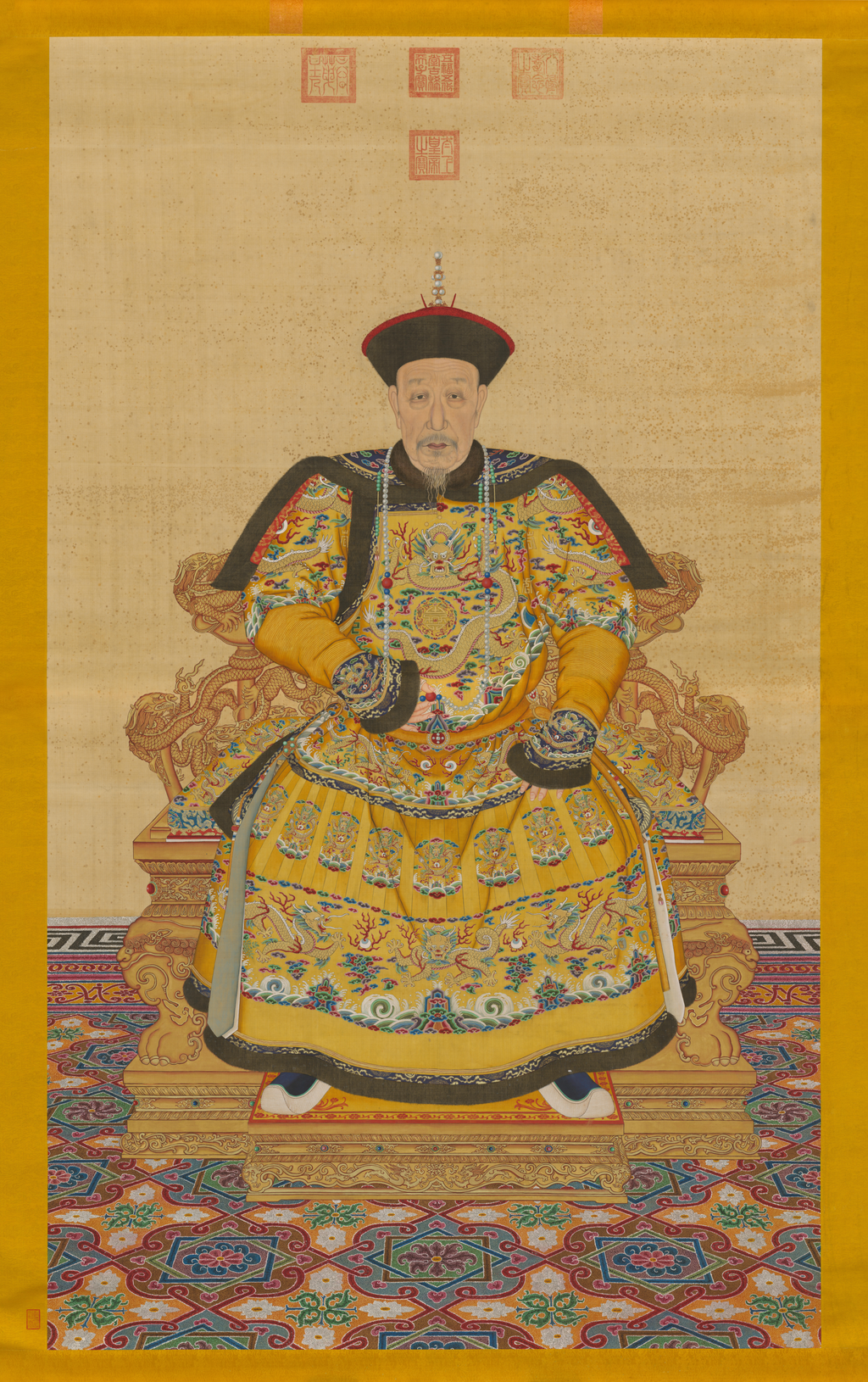
The Qianlong Emperor
Record of Jade Spring Mountain, First Spring Under Heaven
The virtue of water is that it nourishes humankind; its taste is delicate and sweet, and its quality, noble and light. This being so, these three are perfectly attuned to one another: being light, water’s taste is sweet, and drinking it purifies and enhances longevity. Thus, those who judge water always distinguish a spring water’s quality, high or low, by its lightness or heaviness.
We once commissioned a silver vessel to compare the relative weight of various waters. The water of Jade Spring of the Capital weighs one ounce. The water of Saishang at Yixun weighs one ounce. The water of Precious Pearl Spring of Jinan weighs one ounce and one ten thousandths. The water of Mount Jin Spring on the Yangzi weighs one ounce and three ten thousandths. These waters are therefore heavier than that of Jade Spring by one to three ten thousandths. As for the spring waters of Mount Hui and Pawing Tigers, each is heavier than Jade Spring by four ten thousandths; that of Mount Ping is heavier by six ten thousandths, and those of Pure Cool Spring, White Sand, Tiger Hill, and Green Cloud Temple on West Mountain are heavier than Jade Spring by a tenth. Theses comparisons were all reached while on inspection tours, the precise measurements acquired on Our command by Palace Attendants.
But is there none lighter than the water from Jade Spring? Yes. What spring? It is not a spring but snow water. Generally, We simply collect and boil it. It is lighter than Jade Spring by three ounces. Snow water cannot always be obtained, so of all the cold waters issuing from mountains, truly, there is none to surpass Jade Spring of the Capital.
In the past, according to the judgments of Lu Yu and Liu Bochu, either the water from the valley at Mount Lu was first or that from the Yangzi was first, that from Mount Hui was second. Though the southerners indeed enjoyed the benefit of their evaluations, regarding the comparative lightness or heaviness of water, Mount Hui doubtless should yield to the Yangzi. It should be appreciated that the elders did not speak hypothetically, but it is a pity that they not only did not reach Saishang at Yixun, they likewise did not reach Yanjing. As this is the case, Jade Spring is decidedly the First Under Heaven.
In recent years, the Western Sea was cleared to become Lake Kunming and in the region of Mount Wanshou there exist several famous springs. If all were traced to their very sources, then Jade Spring is the numinous artery, true and eminent, the heart of fine water. Moreover, its water is light and its taste is sweet, qualities that the water of Mount Lu cannot achieve and that, We believe, surpasses the water of Mount Jin along the Yangzi. Therefore, Jade Spring is designated First Spring Under Heaven. We order the establishment of the Chonghuan Shrine and a memorial carved in stone to support the Huiji River project. Construction at Jade Spring reinforces the base of Mount Baotu, flowing out to form a lake. Poets compare it to the Rainbow of the Waterfall. We inscribed the Eight Scenic Views of Mount Yan of bygone days; why not also follow in these footsteps and so on?
It is evident that there is justice in the world and falsehood in the world. The record is quite complete. Change is difficult. As for freshwater springs and humankind, there is virtue without resentment. Yet, one cannot avoid misrepresentation. Those Under Heaven who hold virtue and resentment can know fear yet need not be afraid.
御製玉泉山天下第一泉記
水之徳在養人其味貴甘其質貴輕然三者正相資質
輕者味必甘飲之而蠲疴益夀故辨水者恒於其質之
輕重分泉之髙下焉嘗製銀斗較之京師玉泉之水斗
重一兩塞上伊遜之水亦斗重一兩濟南珍珠泉斗重
一兩二釐揚子金山泉斗重一兩三釐則較玉泉重二
釐或三釐矣至惠山虎跑則各重玉泉四釐平山重六
釐清涼山白沙虎邱及西山之碧雲寺各重玉泉一分
是皆巡蹕所至命内侍精量而得者然則無更輕扵玉
泉之水者乎曰有為何泉曰非泉乃雪水也常収積素
而烹之較玉泉斗輕三釐雪水不可恒得則凡出山下
而有冽者誠無過京師之玊泉昔陸羽劉伯芻之論或
以廬山谷簾為第一或以揚子為第一惠山為第二雖
南人享帚之論也然以輕重較之惠山固應讓揚子具
見古人非臆説而惜其不但未至塞上伊遜並且未至
燕京若至此則定以玉泉為天下第一矣近嵗疏西海
為昆明湖萬夀山一帯率有名泉溯源會極則玉泉實
靈脉之發皇德水之樞紐且質輕而味甘廬山雖未到
信有過於揚子之金山者故定名為天下第一泉命將
作崇焕神祠以資惠濟而為記以勒石夫玉泉固趵突
山根蕩漾而成一湖者詩人乃比之飛瀑之垂虹即予
向日題燕山八景亦何嘗不隨聲云云足見公論在世
間誣辭亦在世間籍甚既成雌黄難易泉之於人有徳
而無怨猶不能免訛議焉則挾德怨以應天下者可以
知懼抑亦可以不必懼矣
Source
Yu Mingzhong 于敏中 (1714-1779) et al., Qinding Rixia jiuwen kao 欽定日下舊聞考 (Imperially Commissioned Studies of Hearsay from Under the Sun), juan 8, pp. 10b–12a.
Lu Yu’s Names
眠雲臥石
The Tang dynasty tea master Lu Yu 陸羽 (ca. 733-804 ca.) was known in his lifetime and throughout history by many names. The following appellations provide just some of the names by which he was known during his lifetime and by later writers.
Childhood names
Ji 疾, Malady, Blotchy, Deformity
Jici 季疵, Little Blemish
Surname and given names
Lu Yu 陸羽
Lu Ji 陸季
Lu Ji 陸疾
Surname and courtesy names
Lu Hongjian 陸鴻漸
Lu Jici 陸季疵
Lu Jibi 陸季庇
Aliases
Jingling zi 竟陵子, Master Jingling
Donggang zi 東崗子, Master East Ridge
Sangzhu weng 桑苧翁, Elder Mulberry and Nettle
Dongyuan zi 東園子, Master East Garden
Sobriquets
Lu san 陸三, Lu, The Third
Lu san shanren 陸三山人, Recluse Lu, The Third
Lu sheng 陸生, Sire Lu
Lu chushi 陸處士, Recluse Lu
Lu jushi 陸居士, Layman Lu
Lu Hongjian shanren 陸鴻漸山人, Recluse Lu Hongjian
Churen 楚人, Man of Chu
Chashan yushi 茶山御史, Tea Mountain Scribe
Dongyuan xiansheng 東園先生, Master East Garden
Honorifics
Lu Wenxue 陸文學, Imperial Instructor Lu
Lu Taizhu 陸太祝, Great Invocator Lu
Chadian 茶顛, Foremost Tea Master
Chasheng 茶聖, Tea Sage
Chaxian 茶仙, Tea Immortal
Chashen 茶神, Divinity of Tea
Tea in the Warring States Period
眠雲臥石
Tea was recently excavated from a royal tomb dating over 2,400 years ago to the late Zhou dynasty (1046-256 B.C.E.) and the period known as the Warring States (475-221 B.C.E.). The discovery was made in Shandong at Zoucheng, the capital of the ancient State of Zhu (11th-5th centuries B.C.E.). The archaeological find confirmed the early use of tea as a funerary offering to the dead and indicated its custom among the living. The archaeological context revealed not only the use of tea but also the likely source of the leaf. Moreover, the use of tea at so northerly a location advanced the geographical range of tea as an item of trade or tribute from tea producing regions south of the Yangzi.
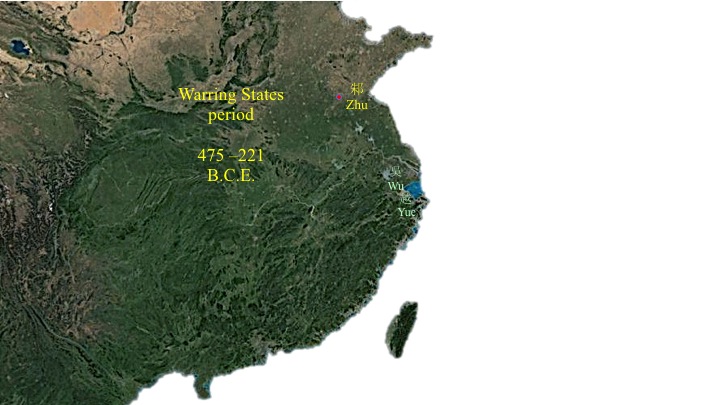
In the eleventh century, during the inaugural years of the Zhou dynasty, the minor State of Zhu was created a vassal and tributary of the major State of Lu. Initially, the ruler of Zhu was ennobled viscount, a hereditary rank, and the state was established just southeast of Qufu, the capital of the State of Lu. Throughout its history, the State of Zhu was harried by its more powerful neighbors and was often forced to move its capital. In the ninth century, the Zhu territory and ruling house were divided to weaken the state. During the Spring and Autumn period, the State of Zhu regained strength. In 659, however, the bordering State of Lu defeated the State of Zhu in battle. In 643, the twelfth ruler of Zhu moved the capital farther southwest to Zoucheng. Over the centuries, nineteen Zhu sovereigns survived the political and military aggression of larger, neighboring states until the State of Zhu and its regnant family were destroyed in the later fifth century.
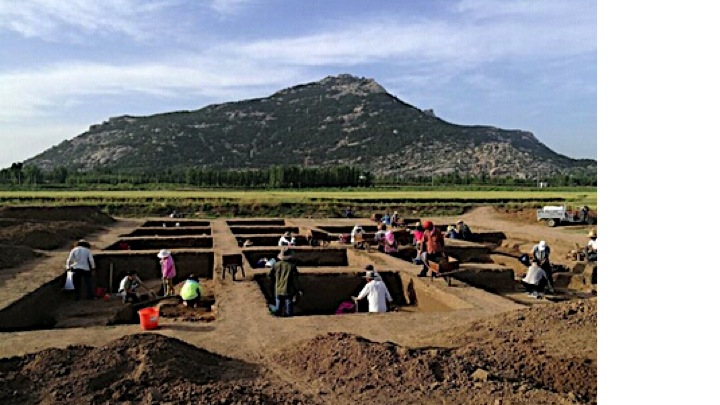
The capital city Zoucheng was strategically sited on the Jinshui River that flowed east to west through the flat, open plain between Mount Yi in the north and Mount Guo in the south. The precinct of the royal palace occupied the north-central axis of the city and was surrounded by a defensive trench and high walls of rammed earth. North of the palace and just beyond the protective ditch lay Xigang, the royal cemetery of the State of Zhu.
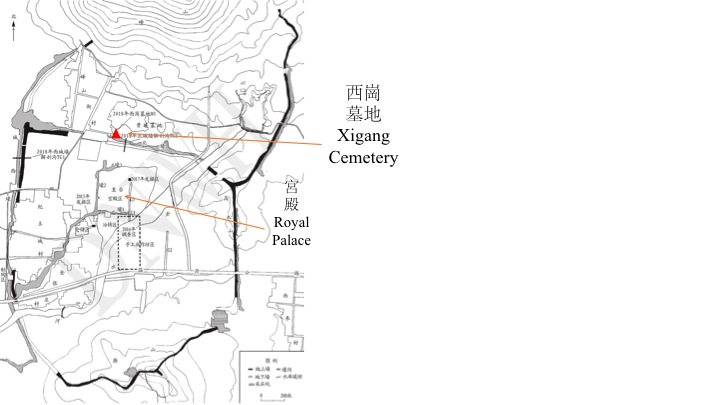
In 2018, excavations at Xigang revealed the graves of a Zhu monarch and his queen. Located side by side, each of the tombs was a deep pit constructed of rammed earth in the shape of a square with a wide entry ramp. The tomb of the queen, which was excavated first and designated Tomb M1, was found to have been repeatedly looted by thieves long ago. However, a number of remaining artifacts were discovered, including a pair of jade pendants, a small ring of jade, remnants of gilt and lacquer ware, and a cache of ceramics.
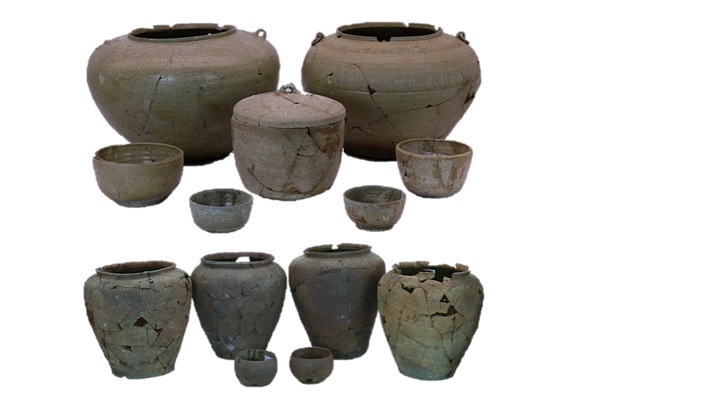
The store of pottery was uncovered on a narrow ledge cut into the south wall of the tomb above the floor of the grave. The earthenware and stoneware pottery were originally placed in a wooden chest that had since rotted away, leaving vessels – jars, large bowls, small cups, a lidded urn – and sherds in a jumble. Also on the ledge, two small stoneware bowls were found overturned, their interiors filled with soil. The earth of one of the bowls contained a dark plant material that was unidentified at the time of excavation but was retained for subsequent examination and testing.
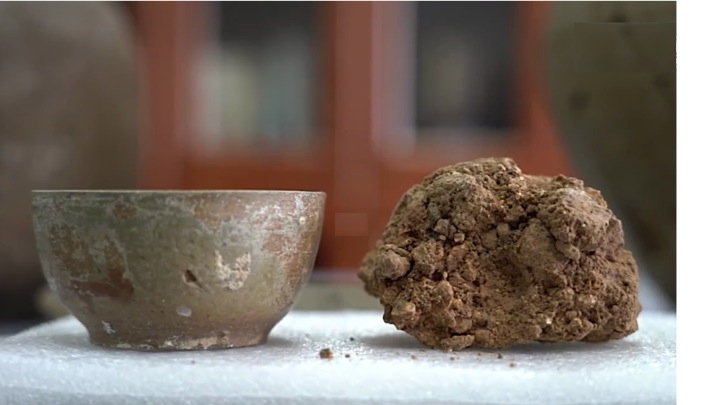
In the past, tea remains from archaeological digs were identified by botanical morphology, the form and structure of the plant. Although the vegetal matter found at Xigang was rotted and blackened as to be unidentifiable by visual means, samples were later subjected to a battery of tests that found the cellular structure of the plant and the abundance of calcium salt crystals matched the genus Camellia. Likewise, the presence of caffeine and theanine identified the plant material as tea.
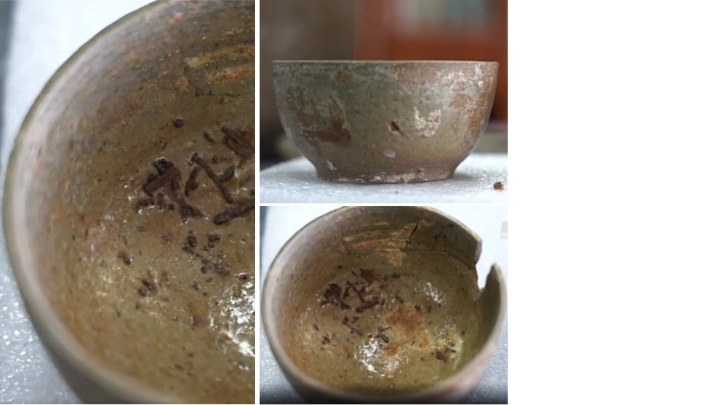
The remains of tea at Zoucheng were in a small bowl, one of two bowls of similar shape, size, and color that were discovered on the aforementioned ledge above the grave. The two bowls were reported as proto-porcelains, a ceramic type more accurately described as a high-fired porcelaneous stoneware with a greenish feldspathic iron glaze. On the basis of body, glaze, and style, the bowls and the other green-glazed stoneware in the cache were identified as Yue ware, imports from the distant pottery kilns of the southern states of Wu and Yue in Jiangsu and Zhejiang, the only fifth century sources of such early celadons.
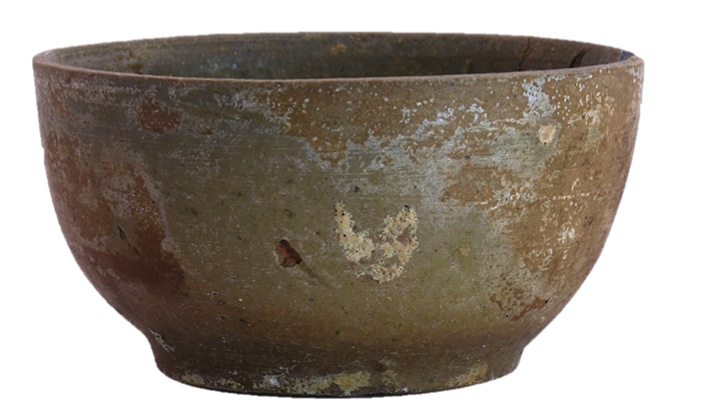
As suggested by the Yue ware and its southern sources, the tea gardens of Jiangsu and Zhejiang were also the likely provenance of the leaves in the bowl. Aligned geographically along the eastern seaboard and latticed with transport waterways, the lower reaches of Shandong and the upper stretches of Jiangsu and Zhejiang exchanged tea and ceramics through trade or tribute. Located just south of Zhu, Wu and Yue were nearer sources of tea than the distant tea producing regions of the State of Chu or Sichuan.
It is also noteworthy that nearly all of the ceramics found in Zoucheng Tomb M1 were coupled with vessels of a similar size and shape: two large jars, two pairs of smaller jars, two large bowls, two small bowls, and two small cups; the only exception to pairing was the single lidded urn. Also, the two small bowls appeared distinct from the cache of ceramics by their location, association, and contents. Whereas the other potteries were empty and stored as a group in the wooden case, the two bowls were found separate from the rest, close together, and out on the ledge. Notably, the one bowl contained tea, a comestible that in the context of ritual burial customarily signified ceremonial sacrifice by the living to the dead.
The discoveries in Shandong document not only the earliest evidence to date for the use of tea during historical times but also the earliest use of tea as a funerary offering. Prior to the archaeological finds at Zoucheng, the earliest tea as sacrifice was dated to the second century B.C.E. and excavated from Han Yangling, the mausoleum of the Han emperor Jingdi at Xi’an nearly five hundred miles away to the west in Shaanxi.
Significantly, the concurrence of tea and Yue ware at Zoucheng marked the beginnings of the ancient and enduring tradition that intimately connected the art of tea with the use of celadon, a practice promoted by the Tang tea master Lu Yu in the Book of Tea in which he famously compared the white wares of Xing to the celadons of Yue:
There are those who judge bowls from Xing superior to ones from Yue. This is certainly not so. If Xing is like silver, then Yue is like jade. This is the first way in which Xing cannot compare to Yue. If Xing is like snow, then Yue is like ice. This is the second way in which Xing cannot compare to Yue. Xing ware is white, and thus the color of liquid tea in the bowl looks reddish. Yue ware is celadon, and thus the color of tea appears greenish. This is the third way in which Xing cannot compare to Yue.
References
Lu Guoquan 路國權 et al., “Shandong Zoucheng shi Zhuguo gucheng yizhi 2015 nian fajue jianbao 山東鄒城市邾國故城遺址2015年發掘簡報 (Brief Report on the 2015 Excavation of the Ruins of the Ancient Capital of the State of Zhu, Shandong),” Kaogu 考古 (Archaeology) (2018), no. 3, pp. 44-67.
Ma Fangqing 馬方青 et al., “Shandong Zoucheng Zhuguo gucheng yizhi 2021 nian fajue chutu zhiwu da yicun fenxi — jiyi gudai chengshi guanli shijiaozhong de ren yu zhiwu 山東鄒城邾國故城遺址2015年發掘 — 出土植物大遺存分析 (Plant Macro Remains Excavated from the Ancient Capital City Site of the State of Zhu in Zoucheng, Shandong Province in 2015: Humans and Plants in the Perspective of Ancient Urban Management),” Kaogu tansuo 考古探索 (Archaeology Discovery) (4 March 2019), pp. 57–69. Accessed 26 January 2022. (https://www.researchgate.net/publication/333973022).
Wang Qing 王青et al., “Shandong Zoucheng Zhuguo gucheng yizhi 2015–2018 nian tianye kaogu de zhuyao shouhuo 山東鄒城邾國故城遺址 2015–2018 年 田野考古的主要收獲 (The Primary Findings from the Field Archaeology at the Ruins of the Ancient Capital of the State of Zhu in Zoucheng, Shandong),” Tongnan wenhua 東南文化 (Southeast Culture) (2019), vol. 3, no. 269, pp. 18–24, pls. 1–3.
Jiang Jianrong et al., “The Analysis and Identification of Charred Suspected Tea Remains Unearthed from Warring State Period Tomb,” Scientific Reports (August, 2021), no 11. Accessed 26 January 2022. (https://www.researchgate.net/publication/353929508).
Lu Guoquan 路國權 et al., “Shandong Zoucheng Zhuguo gucheng Xigang mudi yihao Zhanguo mu chaye yicun fenxi 山東鄒城邾國故城西崗墓地一號戰國墓茶葉遺存分析 (Analysis of Tea Leaf Remains of Number 1 Warring States Tomb at Xigang Cemetery, the Ancient Capital of the State of Zhu, Zoucheng, Shandong), Kaogu yu wenwu 考古與文物 (Archaeology and Cultural Relics)( September, 2021), no. 5, pp. 118-122.
Lament at the Stupa of Jiaoran and the Tomb of Lu Yu
眠雲臥石
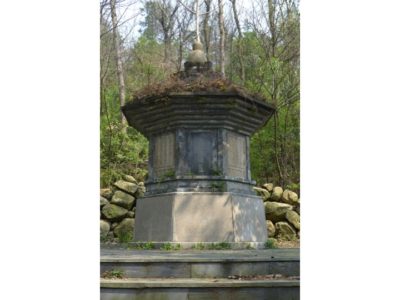
Stupa dedicated to Jiaoran
Meng Jiao of the Tang dynasty
Accompanying Lu Cheng Back to Huzhou, I Composed a Lament to the Dead at the Stupa of Jiaoran and the Tomb of Lu Yu
Pouring rain before the temple,
Pale waterclover gathers in the freshening wind.
Past poetry filled with friendship,
Now my poems, empty.
The lonely moan of the jade flute, doleful,
Distant thoughts, the vista – lush.
Here, the brick stupa of the Zen Master of Mount Zhu.
Here, the Jingling Elder of the Endless Night.
The sound of grasses and trees, profuse
As if filled with a sense of wisdom
By you and all your verses,
Abundant and amassed.
Pursuing poetry, you once said,
Of verse, there truly was no lack.
Yet a river’s song is hard to repeat
And the dust of the capital fills only the body.
Sending you astream, two mandarins,
Colors paired, flying east.
High and serene, the Eastern Realm,
Beautiful abode, cold and sublime.
My hands gather your treasured works,
Offerings that foster joy and full harmony.
Embracing them gratefully at the end,
Not at the pavilion on the banks of the Luo
But at Death, the Great Unity.
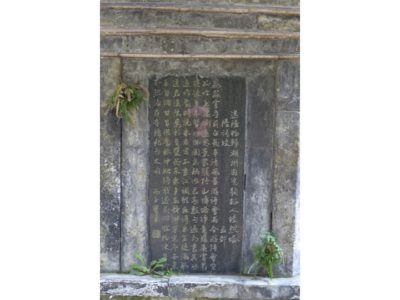
Meng Jiao poem inset in the stupa dedicated to Jiaoran
唐 孟郊
送陸暢歸湖州因憑吊故人皎然塔陸羽墳
淼淼霅寺前 白蘋多清風
昔游詩會滿 今游詩會空
孤吟玉淒惻 遠思景蒙籠
杼山磚塔禪 竟陵廣宵翁
饒彼草木聲 仿佛聞餘聰
因君寄數句 遍為書其叢
追吟當時說 來者實不窮
江調難再得 京塵徒滿躬
送君溪鴛鴦 彩色雙飛東
東多高靜鄉 芳宅冬亦崇
手自擷甘旨 供養歡沖融
待我遂前心 收拾使有終
不然洛岸亭 歸死為大同
全唐詩 juan 379, p. 8b.
The Censor’s Jar
An unusual account of tea was once written by a high court official during the eighth century. The report described the tea used in the offices of the Censorate, one the most powerful and feared agencies of the Tang imperial government.
The Censor’s Jar —The Censorate is comprised of three Bureaus: Headquarters Bureau, its personnel are called Attendant Censors; Palace Bureau, its personnel are called Palace Censors; and Investigation Bureau, its personnel are called Investigation Censors. The Investigation Bureau is located to the south. At the beginning of the Huichang reign period, the Investigation Bureau was renovated by the Investigating Censor Zheng Lu. The Investigation Hall of the Ministry of Rites is called the Hall of Pines, for to its south there are ancient pines. The Investigation Hall of the Ministry of Justice is called the Hall of Nightmares, for being held there causes many bad dreams. The Investigation Hall of the Ministry of War is responsible for the tea for the Bureaus. The tea must be the finest from the markets of Shu. It is stored in a ceramic vessel to protect it from heat and moisture. A censor personally oversees its care. Therefore, it is called the Censor’s Tea Jar.
御史瓶. 御史三院. 一曰臺院. 其僚曰侍御史. 二曰殿院. 其僚曰殿中侍御史. 三曰察院. 其僚曰監察御史. 察院㕔居南. 㑹昌初. 監察御史鄭路所葺. 禮祭廳謂之松廳. 南有古松也. 刑察廳謂之魘廳. 寢於此多魘. 兵察廳常主院中茶. 茶必市蜀之佳者. 貯於陶噐. 以防暑濕. 御史躬親監啟. 故謂之御史茶瓶.
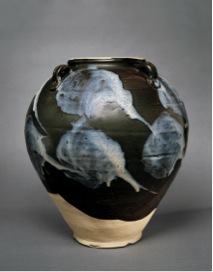
New York
The Yushi ping 御史瓶 or Censor’s Jar was an entry in Record of the Censorate, a twelve-volume work that described the Tang imperial investigative organization known as the Censorate. The study was written by Han Wan 韓琬 (active 710–741), a Palace Censor who revealed the inner workings of the Censorate through nearly a century of its history. A direct witness to the inner workings of the agency, Han Wan detailed the matters of the Bureau through its registers, records, and biographies, including the establishment of the intelligence service, its sources and development, and its handling of official affairs and conduct.
According to Han Wan, tea was so essential to the daily operations of the Censorate that a ministry office was charged with its procurement and no less a senior officer than an imperial censor was charged with managing its storage. The quality of the tea was described as necessarily the best leaf from Shu, its most ancient source in Sichuan. Such was the importance of tea that its very repository was named yushi chaping 御史茶瓶, the Censor’s Tea Jar.
Han Wan was a native of Nanyang, Dengzhou in present Henan. While it was unclear from his Record as to whether or not he was a tea drinker, Han Wan appreciated the herb and its use by the Censorate to make exceptional note of it in his historical account. Moreover, subsequent records such as the Record of Things Heard and Seen testify to the informed interest in tea by later members of the Censorate, including the agency leaders Vice Censor-in-Chief Feng Yan 封演 (js 756) and the Censor-in-Chief Li Jiqing 李季卿 (709–767). Han Wan’s record of the Censor’s Jar was but one of a number of expressions of the utility and esteem of tea among the highest eschelons of the Tang imperial administration, especially northern elites.
Figure
A Large Blue-Splashed Brown-Glazed Stoneware Jar
Tang Dynasty, 8th – 9th Century
Height 16 inches (40.6 cm.)
J. J. Lally & Company
Oriental Art
New York, New York
Notes
Huichang 㑹昌 reign period (841–847).
Zheng Lu: 鄭路 (active ca. 841–847), an Erudite of the Court of Imperial Sacrifices and an Investigating Censor.
Record of the Censorate: Yushi taiji 御史臺記, after 741.
Record of Things Heard and Seen: Fengshi wenjian ji 封氏聞見記, ca. 772.
Sources
Tang yulin 唐語林 (Forest of Discussions of the Tang). Wang Dang 王讜 (active 1089), juan 8, pp. 7a-7b. SKQS.
Yinhua lu因話錄 (Tales of Retribution, 9th century). Compiled by Zhao Lin趙璘 (js 834), juan 5, p. 4b. SKQS.
Yuding yuanjian leihan 御定淵鑑類函 (The Categorized Caseworks of the Yuanjian Studio by Imperial Commission, 1710). Compiled by Zhang Ying張英 (js 1667, 1637-1708), juan 395, pp. 11b-12a. SKQS.
Zhongguo chaye lishi ziliao xuanji 中國茶葉歷史資料選輯 (A Compilation of Historical Materials on Chinese Tea). Compiled by Chen Zugui 陳祖槼 and Zhu Zizhen 朱自振, p. 210. Beijing: Nongye chuban she, 1981.